Why Are My Plant Leaves Turning Yellow? What to Check First
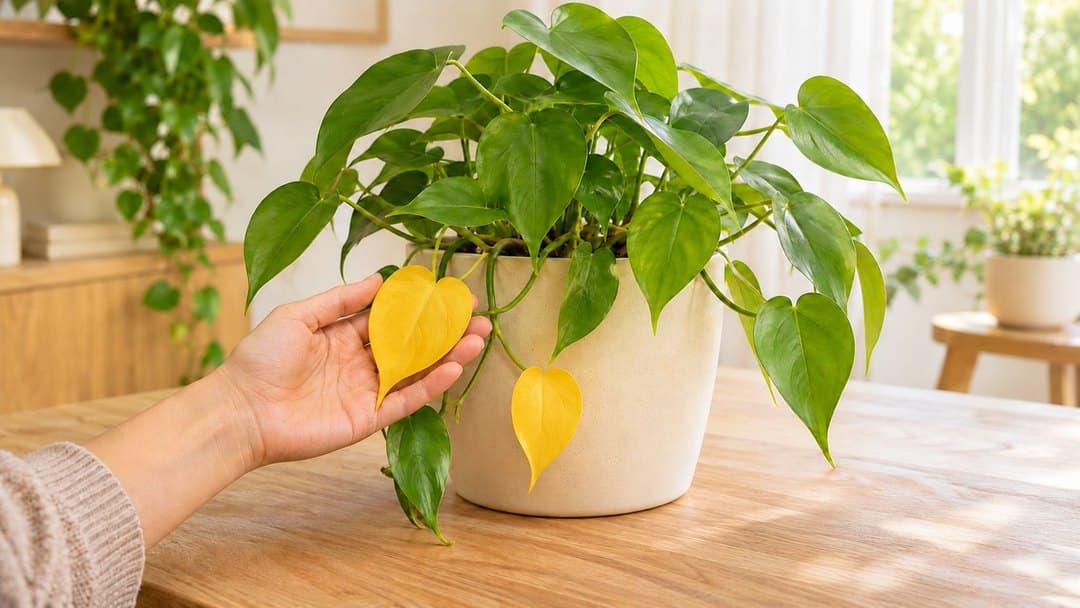
Plant leaves can turn yellow for several reasons, including watering problems, unsuitable light, temperature changes, nutrient issues, pests, or natural aging. The color alone doesn’t tell you which one applies.
Before you water, fertilize, or move your houseplant, check its conditions. As Iowa State University Extension explains, yellowing can involve several factors working together.
Start with the checks below to understand what you’re seeing and choose your next step.
Check these things before changing anything
Take a photo of the whole plant and a close-up of the affected leaves. Then work through these questions.
Which plant is it?
Start with its identity. Different species have different needs, so check the plant’s label or explore an identification before changing its care.
Also distinguish a new color change from its normal markings. Some plants naturally have yellow or cream areas called variegation. The New York Botanical Garden explains these color patterns.
Which leaves are affected?
Count the yellowing leaves. Are they older leaves near the base, newer leaves, or leaves throughout the plant?
An occasional older leaf may yellow naturally. Widespread yellowing deserves a closer look. The RHS distinguishes these patterns in its houseplant guide.
What does the potting mix feel like?
Check below the surface rather than judging by appearance alone. Note whether the mix feels wet, lightly moist, or dry, and when you last watered.
Can excess water drain away?
Check the inner growing pot for drainage holes and look for standing water in the saucer or decorative outer pot.
What changed recently?
Think about a new location, repotting, fertilizer, heating, air conditioning, or a change in watering habits.
What else can you see?
Look for spots, damaged stems, sticky residue, fine webbing, or visible insects. Include the undersides of leaves in your inspection.
Use these clues to choose your next check
This table helps organize your observations. Each row suggests a check, not a confirmed diagnosis.
| What you notice | What to check | Your next step |
|---|---|---|
| One older, lower leaf is yellow; the rest looks unchanged | Leaf age and whether more symptoms appear | Record it and observe before changing the whole routine |
| Several leaves are yellow and the mix stays wet | Drainage, standing water, and watering history | Check those conditions before adding more water |
| Yellowing with very dry potting mix | Moisture deeper in the pot and the species’ needs | Determine whether watering is needed |
| Yellowing after a move | Changes in light, temperature, or drafts | Compare the new location with the plant’s requirements |
| Yellowing with spots or signs of pests | Leaf surfaces, undersides, and stems | Gather more information before choosing a treatment |
These checks reflect the range of overlapping symptoms described in the University of California’s houseplant troubleshooting guide.
Common reasons houseplant leaves turn yellow
Too much water or poor drainage
Persistently wet potting mix can affect root health. Check whether water drains freely and whether the pot is sitting in runoff.
Avoid assuming that a drooping plant needs more water: root problems can also cause wilting. University of Maryland Extension lists both excess and insufficient water among possible causes.
Too little water
Insufficient water can also cause yellowing. Review the moisture in the root ball, how you water, and the plant’s requirements.
Decide based on those conditions rather than increasing watering frequency simply because a leaf changed color.
Unsuitable light
Look at the plant’s actual location. Has it moved farther from a window or into stronger direct sunlight?
Too much, too little, or a sudden change in light can contribute to foliage problems. Adjust exposure gradually when a change is needed. Iowa State University Extension discusses these environmental factors.
Temperature changes
Check for nearby heating vents, air-conditioning outlets, drafty windows, or frequently opened doors. Consider recent exposure during transport, too.
Compare those conditions with the species’ requirements before deciding where to move it.
Nutrient-related problems
Nutrient availability can contribute to yellowing, but adding fertilizer isn’t an automatic solution.
Root stress and potting conditions can affect nutrient uptake. Review watering and the plant’s feeding history before choosing a fertilizer or changing the dose. Wisconsin Horticulture explains how several factors can produce similar yellowing symptoms.
Pests or other health problems
Inspect the plant for insects, webbing, sticky patches, spots, and damaged tissue.
Several pests and root problems can be associated with yellowing. Use additional evidence to investigate rather than naming a pest or disease from color alone. University of Maryland Extension provides a symptom-based reference.
Natural leaf aging
An older leaf may yellow and fall as part of the plant’s normal growth cycle.
The important context is what the rest of the plant is doing. Continue observing rather than assuming every yellow leaf needs treatment. Wisconsin Horticulture describes this natural shedding process.
A pothos example: what to check and record
This example is illustrative, not a documented recovery case.
Imagine that your golden pothos has two leaves that recently turned yellow. Its other leaves have familiar green-and-gold markings.
First, distinguish the new yellowing from the existing variegation. Photograph the whole plant and both affected leaves.
Next, record what you find: the potting mix is still damp, and water has collected inside the decorative pot. That gives you something specific to address, but it doesn’t prove the complete cause of the yellowing.
Empty the standing water, check that the inner pot drains, and assess moisture before watering again. Keep a dated note of what you observed and changed.
When you return, compare photos and check whether additional leaves are affected. The purpose is to build a clearer record without inventing a diagnosis or expecting an immediate recovery.
What not to do when you spot yellow leaves
Avoid reacting to color alone:
-
Don’t water automatically. Check moisture and drainage first.
-
Don’t reach straight for fertilizer. Review the growing conditions.
-
Don’t change everything together. Record which adjustments you make.
-
Don’t remove leaves indiscriminately. Observe the pattern before pruning.
-
Don’t expect an overnight result. Follow the whole plant over time.
If the plant is declining rapidly or you can’t identify the problem, seek advice from a local Extension service or qualified horticulture professional.
Keep track of what changes with Hortola
Once you’ve made your initial observations, Hortola gives you a place to keep the plant and its care together.
Photograph your plant and explore its health assessment. Compare the likely issue and alternative possibility with your observations, then ask the Gardener follow-up questions if you need help understanding the guidance.
Save the plant to your garden and use its journal to record what you noticed and what you did. Adding another photo runs the health check again, allowing you to revisit the assessment alongside your notes.
Use similar lighting and angles for photo updates so they’re easier to compare. A photo assessment offers guidance about possible causes; it doesn’t measure soil moisture or confirm a nutrient deficiency.
Frequently asked questions
Can yellow leaves turn green again?
It depends on the cause and the condition of the leaf. Don’t count on an already-yellow leaf returning to green after you adjust care.
University of Maryland Extension notes that stress-related yellowing often remains, even when the underlying issue is being corrected. Watch the rest of the plant and subsequent growth as well as the original leaf.
Should I remove yellow leaves?
There isn’t one rule for every situation. A fully dead leaf, a partly green leaf, and a leaf with suspected disease may require different decisions.
Record the symptoms first. If removal is appropriate, use clean tools and avoid removing large amounts of living foliage. Removing a leaf doesn’t resolve the underlying cause.
Can both overwatering and underwatering cause yellow leaves?
Yes. Their visible symptoms can overlap, so yellowing alone won’t tell you whether to add water.
Check the potting mix, drainage, watering history, and species’ needs together. University of Maryland Extension explains this overlap.
Start with a closer look
Before changing your plant’s care, identify what you can observe and what still needs checking. Choose a next step based on those findings, then keep track of what happens.
Keep a record of what you notice and what you change. Save your plant in Hortola and add photos to follow its progress.