How to Tell If Your Plant Needs Water
To tell if your plant needs water, check the potting mix below the surface, compare the pot’s weight with how it feels after watering, and consider how much drying that species needs between waterings. Use those clues together rather than relying on drooping leaves or a dry-looking surface alone.
You don’t need to wait until your plant looks stressed. A few regular checks can help you recognize when watering is appropriate—and when the better next step is to leave the watering can where it is.
Start With Your Plant’s Watering Needs
Before checking moisture, find out what conditions your plant prefers. A cactus and a fern shouldn’t be watered at the same point in their drying cycle.
Some houseplants need their potting mix to dry considerably between waterings. Others need moisture replenished before the mix dries out completely. Oklahoma State University Extension explains these differences, including exceptions among moisture-sensitive plants and succulents.
That’s why “water when the top two inches are dry” isn’t a universal rule. It can be a useful starting check for some plants, but the right interpretation depends on the species, pot size, and growing medium.
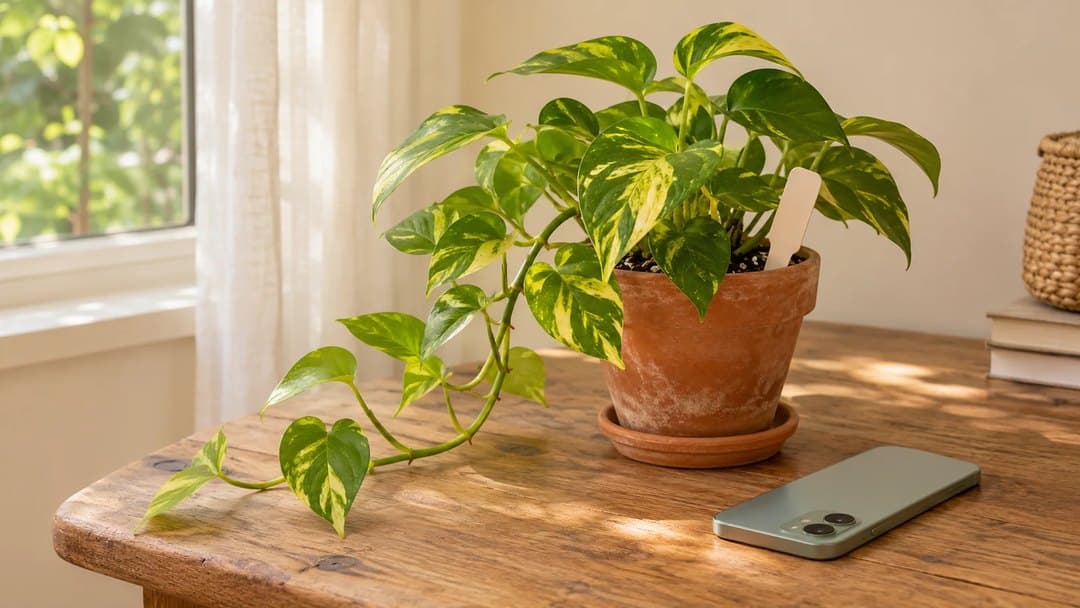
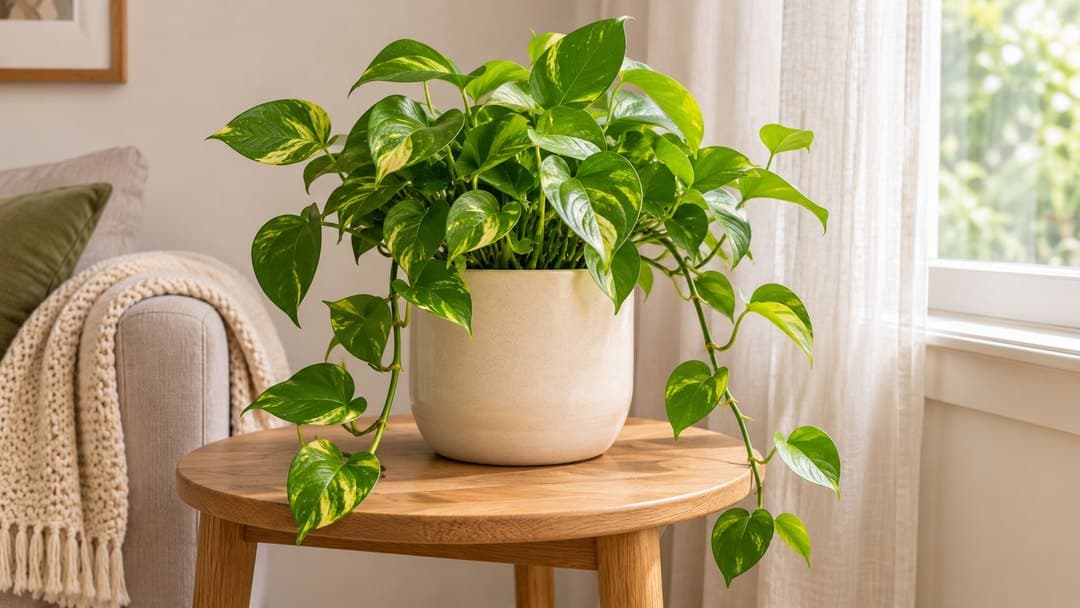
If you’re unsure what you’re growing, check its label or explore an identification first. Then use species-specific guidance alongside the conditions in your home. For example, our pothos care guide explains what to consider for Epipremnum aureum.
The goal is to understand how much drying your plant needs, then check whether its potting mix has reached that point.
Check Your Plant Before You Water
Work through these checks together. Each gives you part of the picture.
Feel the potting mix below the surface
The top layer can look dry while the mix underneath still holds moisture.
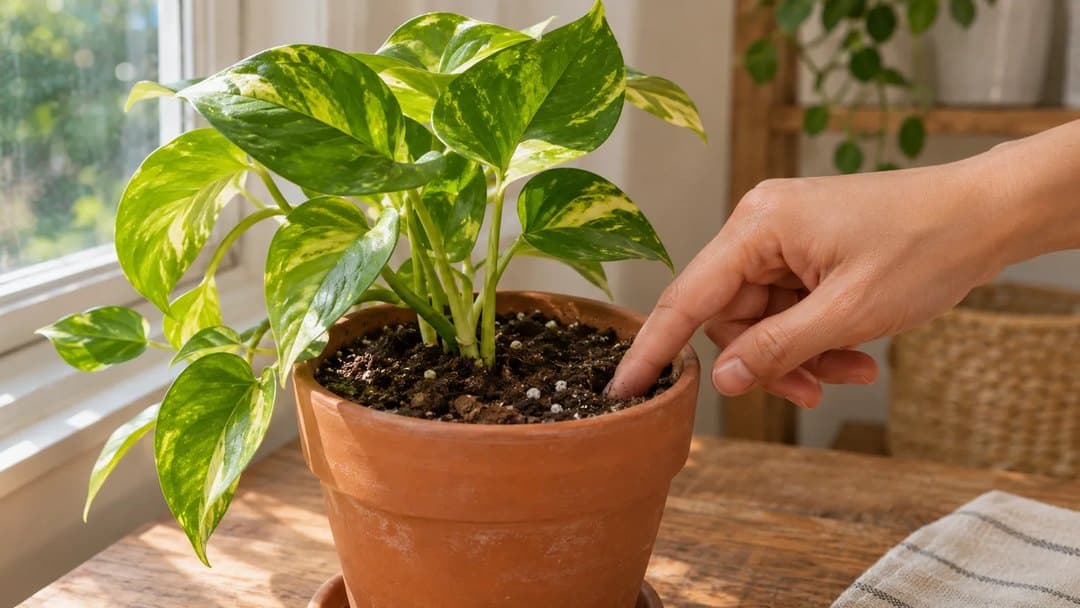
Gently insert a finger into an accessible area of the potting mix, avoiding the stem and any resistance from roots. Notice whether it feels dry, slightly moist, or very wet.
Texas A&M AgriLife Extension recommends checking approximately one to two inches below the surface as part of assessing houseplant watering needs. Treat that as a check, rather than a fixed watering threshold for every species.
In a large or deep container, this shallow check won’t tell you everything about moisture farther down. If the surface feels dry but the pot remains unusually heavy, gather more information before adding water.
Don’t judge only by whether a few particles stick to your finger. Potting mixes have different textures, and the result needs to make sense alongside the other checks.
Compare the pot’s weight
For a manageable container, gently lift the pot and notice its weight.
The useful comparison is with the same pot at different stages. After watering and allowing excess water to drain, notice how heavy it feels. During later checks, compare that feeling as the mix dries.
Texas A&M AgriLife Extension identifies pot weight as another helpful clue: a heavier pot may still contain substantial moisture, while a lighter one may be approaching the need for watering.
This takes practice. A heavy ceramic container can make small changes harder to notice, and you shouldn’t lift a large or awkward plant just to perform the test. Use another check when lifting isn’t practical.
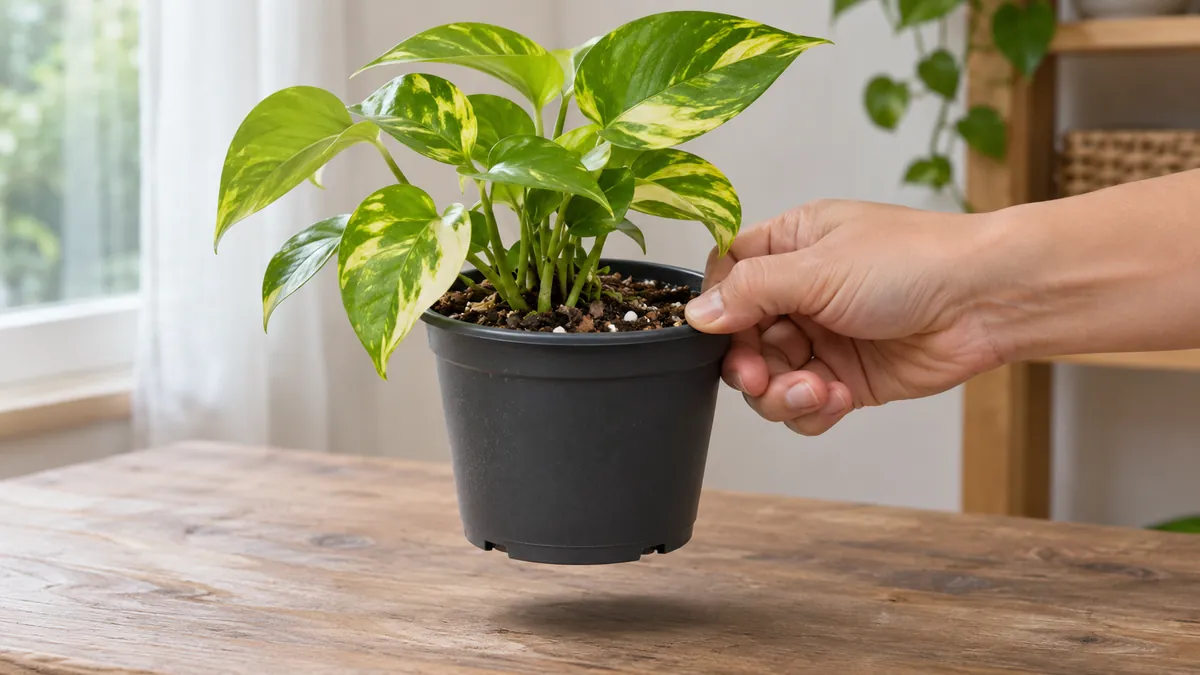
Compare the same pot after watering and draining with how it feels as the potting mix dries.
Look at the leaves—and check the soil again
Drooping or less-firm leaves can accompany a shortage of water. They can also occur when roots are struggling in wet conditions.
Before watering a drooping plant, check the potting mix. If it is still wet, adding more water may compound the problem.
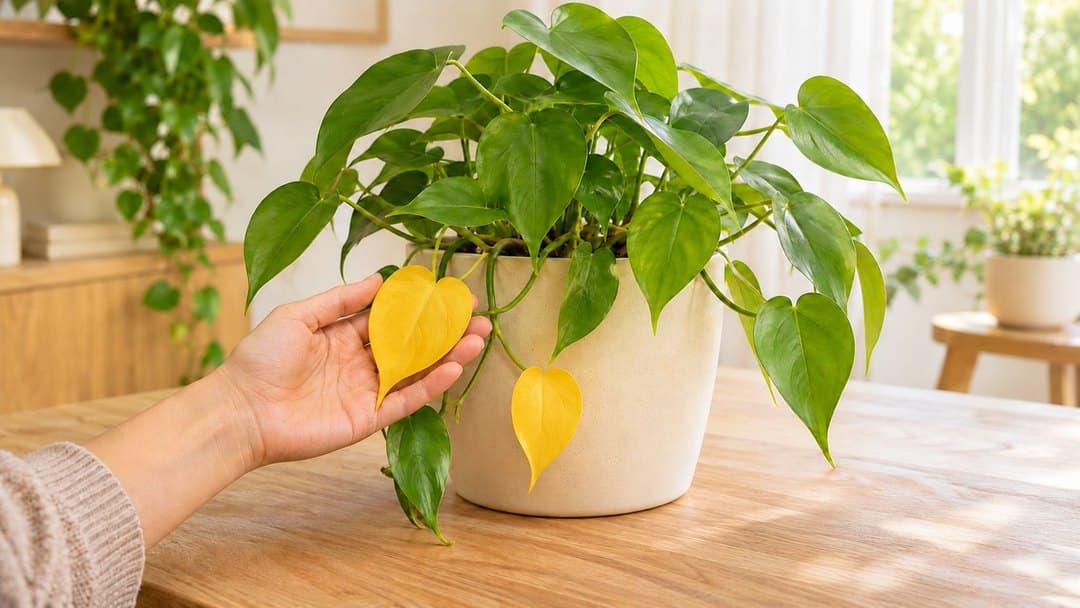
Yellow leaves are similarly ambiguous. Their color alone won’t tell you whether the plant is thirsty. Our guide to why plant leaves turn yellow explains other factors worth investigating.
Avoid waiting for dramatic wilting as your regular watering signal. Learning how the potting mix and container change can help you act before visible stress develops.
Check drainage and recent watering
Look at the container as well as the plant.
Does the growing pot have drainage holes? Is water sitting in its saucer or decorative outer pot? When did you last water, and did the mix receive water throughout?
A dry-looking surface doesn’t cancel out water collected underneath. Likewise, a recent watering date doesn’t prove that every part of the root ball received moisture.
Use your watering history as context, then check what is happening now.
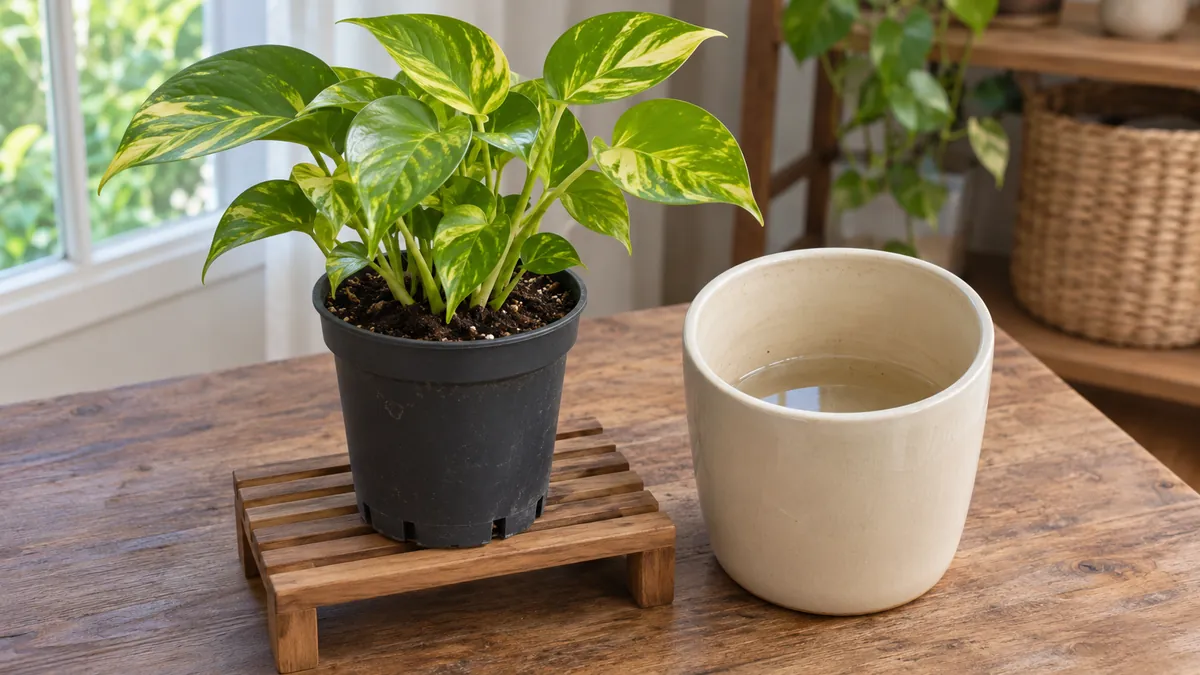
Check the growing pot’s drainage holes and empty water collected in the decorative outer pot.
What Your Checks May Be Telling You
Use this table to organize your observations. It suggests a next step, rather than diagnosing the plant.
| What you notice | What to do next |
|---|---|
| The mix has dried sufficiently for the species, and the pot feels lighter | Watering may be appropriate. Check that excess water can drain away. |
| The surface looks dry, but the mix below is still moist | Don’t decide from the surface alone. Compare that moisture with the species’ needs. |
| The leaves droop while the mix remains wet | Check drainage, standing water, and other possible causes before adding water. |
| The pot feels heavy despite a dry surface | Investigate moisture farther down rather than assuming the whole pot is dry. |
| Your checks give conflicting results | Recheck the conditions and species guidance before changing the routine. |
You don’t need to turn every inspection into a care task. Sometimes the useful result is simply confirming that watering isn’t needed yet.
Why Your Plant Doesn’t Need Water on the Same Schedule Every Week
Your plant’s water use and the speed at which its potting mix dries can change.
Relevant factors include:
- Light: A brighter location can change growth and water use.
- Temperature and humidity: Warm, dry conditions can increase moisture loss.
- Growth: A plant growing actively may use water differently from one growing slowly.
- Container: Pot size, material, and drainage affect how moisture behaves.
- Potting mix: Different materials retain and release water differently.
A routine that worked during one season may therefore need adjusting later. Moving a plant, repotting it, or starting indoor heating can also change the conditions.
Checking on a regular schedule can be helpful. Automatically watering on that schedule is a different decision.
If you check on Saturday and the mix is still appropriately moist, you can record that observation and return later without watering.
When It Is Time to Water
Once your checks indicate that watering is appropriate for the species, water the potting mix and allow excess water to drain.
For houseplants suited to thorough watering, apply enough to moisten the mix throughout and let runoff escape through the drainage holes. Empty water collected in the saucer or outer pot rather than leaving the growing pot standing in it.
Texas A&M AgriLife Extension recommends this approach to help maintain suitable conditions around the roots.
Pay attention to what happens. If water immediately runs around a very dry root ball while the center remains dry, don’t assume that runoff means the whole mix has been moistened.
The same principle applies afterward: check the plant’s conditions before the next watering instead of deciding on a fixed interval in advance.
Keep Track of What You Notice With Hortola
A short record can help you learn how your particular plant dries between waterings.
Start with a few observations:
- How the potting mix feels.
- Whether the pot feels heavy or light.
- Whether you watered.
- Any recent changes in location or growing conditions.
For example, an illustrative journal entry might read:
“Potting mix still moist below the surface. Pot feels heavy. Did not water today.”
A later entry might record that the mix had reached the appropriate dryness for the species and that you watered and emptied the saucer.
You can save your first plant in Hortola and use its journal to keep your plant care together. Over time, those observations give you useful context when the plant’s needs appear to change.
Photos can help document visible changes. They don’t measure moisture inside the pot, so keep checking the growing medium directly.
Frequently Asked Questions
Can a plant need water even if the soil looks damp?
Appearance alone can be misleading. Check how the mix feels below the surface and consider whether moisture is distributed throughout the pot. If the root zone is already wet, don’t add water simply because the leaves look stressed.
Should I wait until the leaves droop?
Avoid using drooping as your routine signal. Some plants show visible stress only after becoming too dry, and drooping can also occur in wet conditions. Check moisture before the plant reaches that point.
Do I need a moisture meter?
No. Checking the mix and learning the weight of a manageable pot can provide useful information. If you use a meter, follow its instructions and interpret the reading alongside the species’ needs and your other observations. One reading shouldn’t determine every watering decision.
Should I water every time I get a reminder?
Check the plant first. A reminder can prompt you to inspect moisture and drainage; it doesn’t establish that water is needed that day. If conditions are still suitable, record the check without watering.
Get to Know Your Plant’s Drying Cycle
Start with the species’ needs, check below the surface, and compare the pot’s weight when practical. Use leaf appearance and watering history to add context.
With repeated observations, you can build a routine that responds to your plant’s conditions.
Save your plant in Hortola and keep a record of what you check, when you water, and what changes.